
What Is Pion?
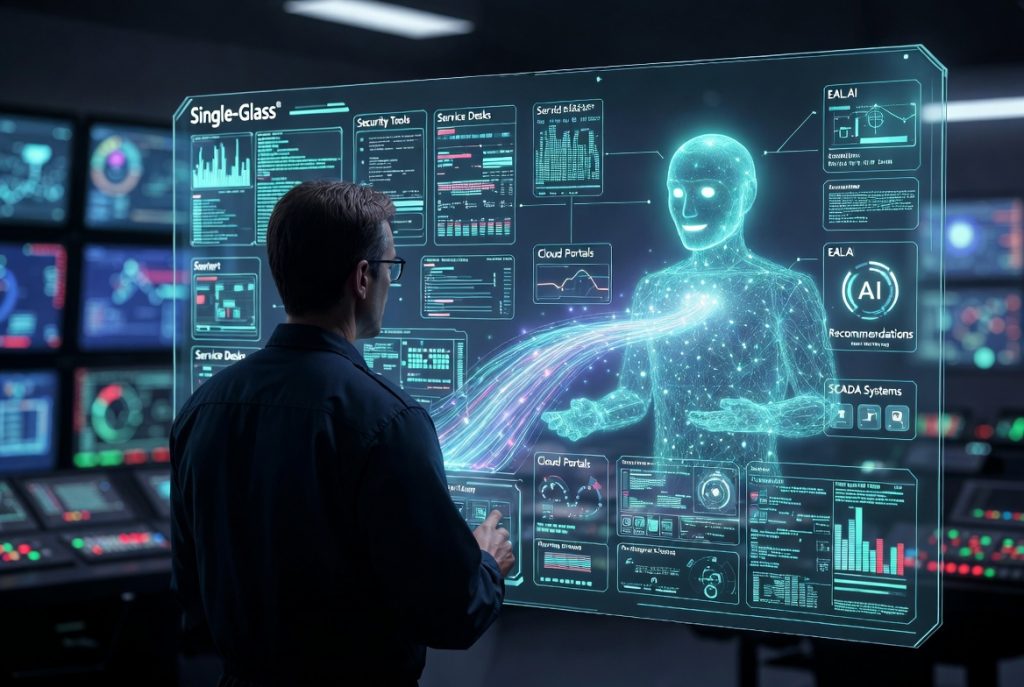
Pion® is an intelligent command platform that has been developed by NGCC5 inc. from the ground up and as one unified solution to help managed service providers and critical infrastructure operators monitor, understand, and respond to complex client environments from one unified operational view. Instead of forcing technicians to jump between security tools, service desks, remote management systems, cloud portals, SCADA/OT consoles, and reporting documents, Pion is designed to bring those signals into a single command center. The platform gives the operator a clear view of which client, site, or system needs attention, then helps route them directly into the right workspace to investigate, act, document, and close the issue.

The intelligence layer behind Pion is EAL.AI (Patent Pending), which stands for Execution, Awareness, and Learning. EAL.AI has been designed to follow the technician through the operational flow, understanding the selected client, site, system, device, risk level, approval boundary, and available evidence. Its role is to explain what is happening, recommend next steps, support safe decision-making, and help produce operational and executive reporting. EAL.AI can also be permissioned to act autonomously in time sensitive critical matters such as a “denial of service” “ransomware” attack by identifying, isolating, closing the attached port and rerouting and partitioning normal traffic to an alternate safe port while alerting the support team to investigate. The value of Pion is that it moves organizations beyond fragmented dashboards and reactive support to a proactive response and towards what we call “Single-Glass ®” operational closure: seeing the problem, understanding the context, taking the right action, and documenting the outcome without losing operational continuity.
Why Pion Matters
Modern support environments are fragmented. A single incident can involve SOC alerts, network behavior incidents, endpoint device state, cloud identity, service desk history, SCADA/OT sensitivity, approval requirements, and executive reporting. When these systems are separated, response is slower and more error prone. Technicians lose time collecting context. Executives receive delayed summaries. Clients may not understand what was done or why.
Pion matters because it has been designed to connect those operational layers. The platform’s direction is to make the problem visible, make the next step obvious, keep the technician in context, support safe action, and preserve the evidence needed for closeout.
The deeper value of Pion is not only in detecting trouble. It is in creating a disciplined path from detection to decision to action to validation to documentation. That is the “single-glass operational closure” goal: the user should not have to leave the platform to investigate, decide, coordinate, approve, remediate, validate, and document an issue, except where physical hardware replacement or external production constraints require it. Pion increases support capability while reducing headcount requirement.